



Sending a generic file-sharing link to a client often undermines professional credibility. When a business relies on third-party platforms, the client must leave the corporate ecosystem to access sensitive assets. This transition breaks the visual journey and can trigger security concerns. A white-label file manager solves this by integrating the file-sharing experience directly into the brand’s identity.
Building Client Trust Through Visual Consistency
Trust is a fundamental requirement for professional data exchange. Third-party branding on download pages often leads to “brand dilution.” Clients may wonder why they are depositing sensitive documents on a platform they do not recognize.
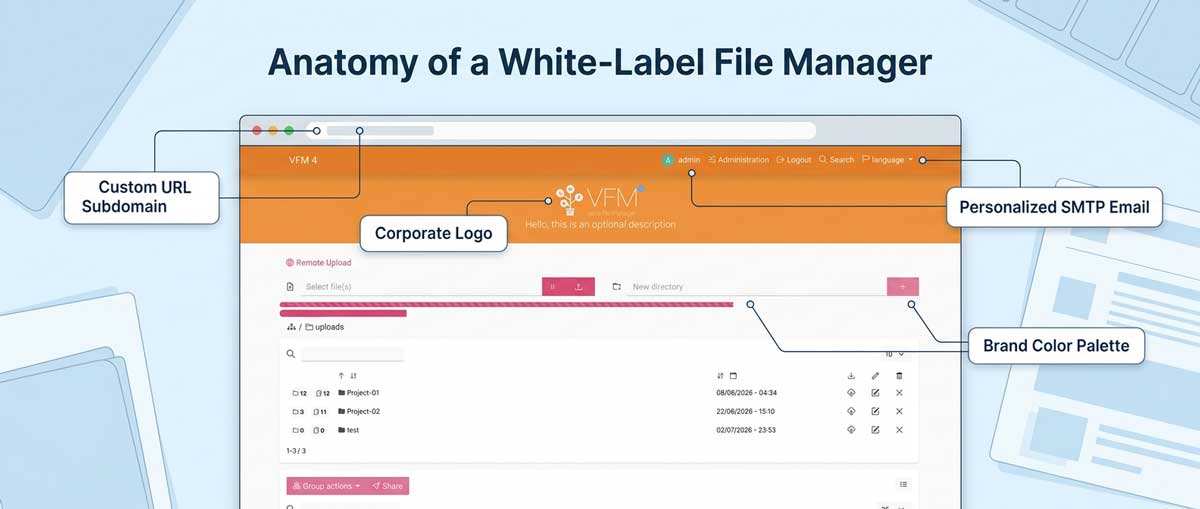
A white-label solution allows a firm to maintain control over the entire user experience. This starts at the login screen. A professional portal should feature the company’s logo, corporate color schemes, and a custom background. This immediate visual confirmation tells the client they are in a secure, managed environment.
Use Case: The Creative Agency and Professional Continuity
Design studios and marketing agencies must demonstrate visual expertise in every interaction. Using a generic service like Dropbox or WeTransfer creates a disconnect between the agency’s premium service and its delivery method.
By hosting a portal on a subdomain, such as clients.agencyname.com, the firm ensures complete continuity. Advanced tools like Veno File Manager (VFM) allow agencies to inject custom CSS and modify typography. This ensures the file portal feels like a natural extension of the agency’s main website. When a client logs in to review a campaign, the seamless transition reinforces the agency’s authority and justifies higher service rates.
Use Case: Compliance in Legal and Financial Services
For firms handling sensitive PII (Personally Identifiable Information), brand alignment is a matter of security perception. A generic interface can look like a phishing attempt or an unmanaged “Shadow IT” tool.
A branded file manager allows these firms to add custom footer links, Privacy Policies, and localized Terms of Service. This alignment ensures the client views the portal as a secure, internal resource. Solutions like Veno File Manager further simplify this by storing all branding assets—logos and styles—directly in the file system. This flat-file approach makes the entire branded environment portable and easy to back up without a database.
Technical Control and Ownership
True white-labeling goes beyond a simple logo upload. It involves the total removal of third-party footprints. This includes the emails the system sends. A professional file manager should allow for customized HTML email templates. Every “New File” notification or “Password Reset” mail must carry the corporate signature and styling.
VFM enables this level of detail through an intuitive administration panel. Users can change color scheme or add custom scripts for live chat support. This turns a simple file repository into a multifunctional client hub.
The Long-Term Benefit of Self-Hosting
Relying on a subscription-based cloud service means you never truly own your portal. A self-hosted, white-label file manager provides total data sovereignty. You own the software, the data, and the visual identity. By moving away from generic links, businesses transform a basic utility into a strategic asset that builds long-term client loyalty.