



High bounce rates and low user retention are the silent killers of digital growth. Most WordPress sites act as one-way streets where publishers push content and visitors passively consume it. To break this cycle, you must pivot toward interactive content for WordPress. By transforming your site from a reading room into a creative hub, you turn casual visitors into active participants.
Building a viral meme portal is one of the most effective ways to lower bounce rates and force organic social growth. When users create and share content directly from your domain, they do the marketing for you.
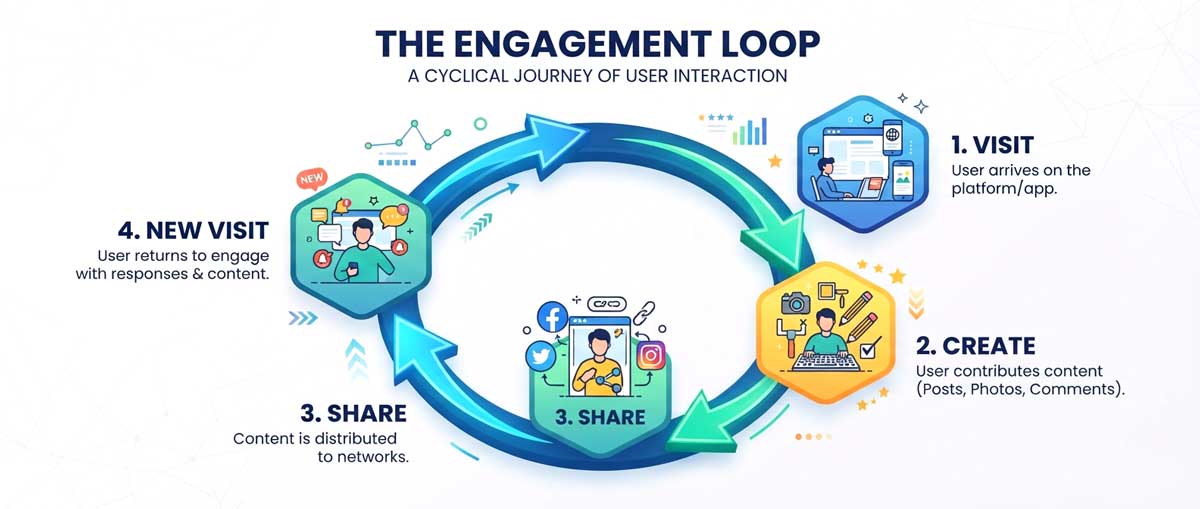
The Shift from Passive Reading to Active Creation
The “Attention Economy” demands more than just well-written text. If a visitor doesn’t interact with your page within the first few seconds, they are likely to leave. Static images and text-heavy posts often fail to provide the immediate gratification that modern audiences crave.
Integrating a creative canvas solves this problem. When you allow users to build their own visual content, you significantly increase the “Time on Page.” This metric is a critical signal for search engine rankings. A user who spends five minutes perfecting a meme is far more valuable to your SEO than ten users who bounce after thirty seconds.
Looking at the Model: What Imgflip Got Right
There’s already a proof of concept for this, and it’s a household name in meme culture: Imgflip. Millions of people visit the site every month for one reason — a simple, fast generator that lets anyone drop text onto a template and get a shareable image in seconds. No account required, no friction. That simplicity is exactly why it became one of the default destinations for meme-making on the open web.
But Imgflip’s success also highlights the trade-off every publisher faces when they send their audience to a third-party tool. Every meme made there lives on Imgflip’s domain, under Imgflip’s URL structure, feeding Imgflip’s own traffic and SEO — not yours. If your niche community is already used to going there to react to your content, you’re effectively outsourcing your most engaged moment to somebody else’s site.
The lesson isn’t “copy Imgflip.” It’s “bring that same mechanic home.”
Use Case: Establishing a Niche Viral Hub
Niche blogs — whether they focus on gaming, cryptocurrency, or local politics — rely on community identity. These communities communicate through shared humor and visual language.
- The Strategy: Instead of just posting news, you provide the tools for the community to react to that news.
- The Implementation: By using modern infrastructure like native Gutenberg blocks — the approach MeMeMe takes — you can embed a generator into any trending post. This allows your audience to generate satirical content or “reaction memes” instantly, without ever leaving your site.
- The Result: Your site becomes the “official” headquarters for that community’s creative output. Users don’t just come to read; they come to contribute. This fosters a sense of ownership that keeps them returning daily.
Beyond the Watermark: Why the Meme Itself Needs to Be a Page
A watermark is the most common answer to the “stolen traffic” problem, and it does help — when a meme travels to Reddit or Instagram with your logo baked in, your brand travels with it. But a watermark only protects an image. It doesn’t generate a new page, a new URL, or a new ranking opportunity.
This is where the model needs to go one step further than a simple generator-and-download tool like Imgflip. Plugins like MeMeMe treat every meme a user creates as a real content object — a custom post type, not just a file — so it gets its own permalink. Ideally, that permalink is generated automatically: from the title if the user bothers to set one, or, more realistically, from the first line of text typed onto the meme itself, since that’s usually the closest thing to a natural title the content already has.
The difference is significant. A watermarked JPEG floating around social media protects your brand. A dedicated, indexable page with its own URL does that and gives search engines something new to crawl — every meme becomes a small, independent entry point back to your site. Pair that with a ready set of one-click sharing buttons for the major social networks, so users share the link rather than a downloaded file, and the meme stops being a one-off image. It becomes a page that keeps working long after it was made.
Technical Flexibility: Blocks, Shortcodes, and Performance
To scale a viral portal, your technical stack must be flexible. Modern WordPress sites often use a mix of the Gutenberg editor and custom page builders. Your tools should not limit your design.
By utilizing blocks that compile into efficient shortcodes, you can deploy creative tools across any environment. This hybrid approach ensures that whether you are using the native editor or a custom builder like Elementor, the interactive elements remain functional. Furthermore, by using HTML5 Canvas for rendering, the server-side load remains minimal. The user’s browser does the heavy lifting, ensuring your site stays fast even during massive viral traffic spikes.
For deep dives into optimizing your site’s performance, refer to the WordPress Performance Team’s documentation.
Data Ownership and Growth
The ultimate goal of a viral portal is data sovereignty. When you host the creative tools, you own the assets created by your users — not just the images, but the pages, the permalinks, and the traffic they bring back. You are no longer a tenant sending your audience to someone else’s meme generator; you are the landlord of your own viral ecosystem.
Bringing that Imgflip-style mechanic onto your own domain, with each meme living as a real, shareable page under your brand, is what tools like MeMeMe were built to do. By prioritizing interactive content for WordPress, you move beyond simple publishing and start building a self-sustaining traffic engine — one meme, and one permalink, at a time.